
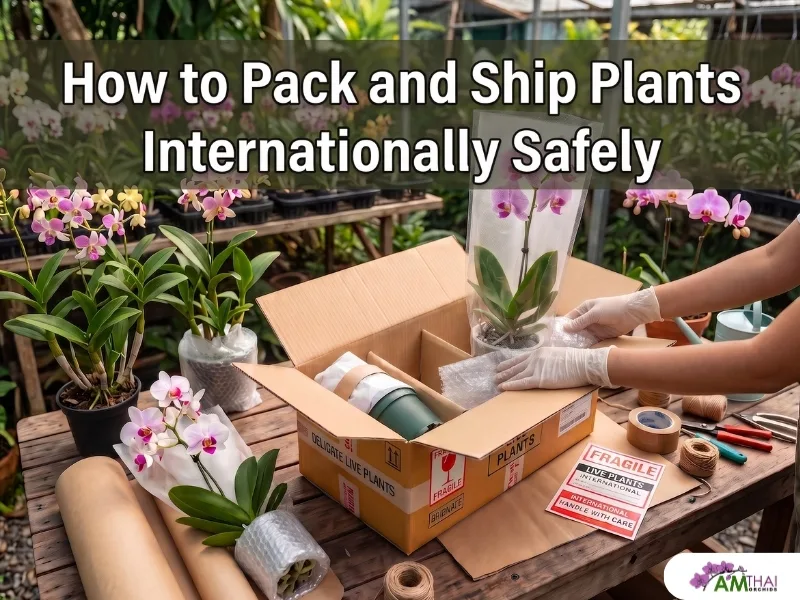
How to Pack and Ship Plants Internationally Safely
Shipping plants overseas involves much more than simply putting them in a box and sending them to their destination. Packaging and logistics play an important role because plants are living products that can easily be bruised, dehydrated, or damaged during transit. If the packaging is not suitable, plant quality may decline before the shipment reaches the customer. In this article, we will walk you through practical ways to prepare, pack, and transport plants safely while helping them arrive at their destination in good condition.
Preparing Plants Before Packaging
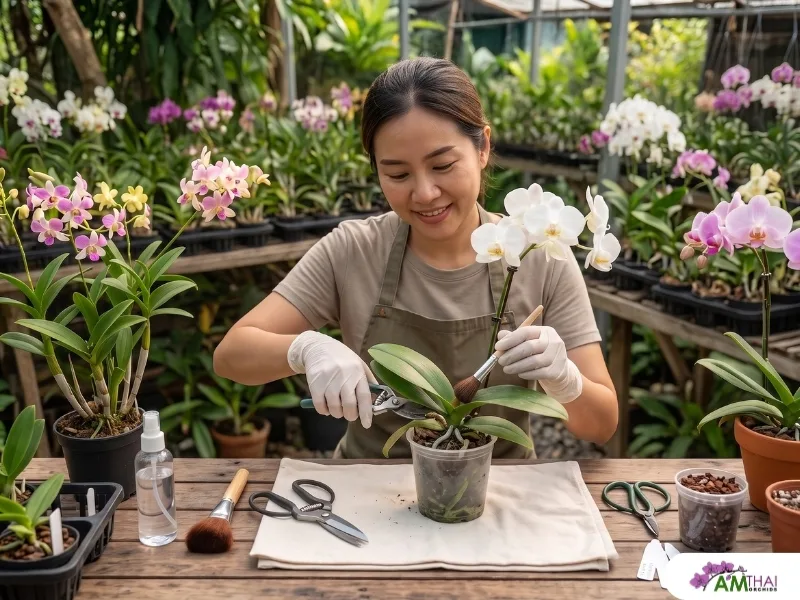
Before packing plants for export, it is important to make sure they are healthy and have the right level of moisture. Plants may spend several hours or even days inside a shipping box, so too much moisture can increase the risk of mold, root damage, or leaf rot during transportation. Proper preparation should include the following steps:
- Clean the plants: Remove loose soil, dried leaves, and debris from the plants and growing media to reduce potential sources of pests and fungal growth.
- Remove damaged parts: Trim yellow, bruised, or rotting leaves and plant parts, as they may deteriorate faster inside a closed package.
- Control watering before shipment: Avoid soaking the growing media before packing. Plants should have enough moisture to stay hydrated without leaving excess water inside the package.
- Reduce fertilizer before shipping: Avoid heavy fertilization close to the shipping date. Depending on the plant and growing conditions, fertilizer may be reduced or stopped around one week before shipment.
- Acclimate plants for transportation: For longer journeys, plants may benefit from gradual adjustment to lower light levels or different environmental conditions before packing. This can help them cope better with the time spent inside a box.
Preparing plants properly before packaging is just as important as choosing the right box or cushioning material. Good preparation helps reduce problems caused by excess moisture, bruising, and deterioration, giving the plants a better chance of arriving healthy and ready for the customer.
Choosing the Right Packaging Materials and Export Boxes
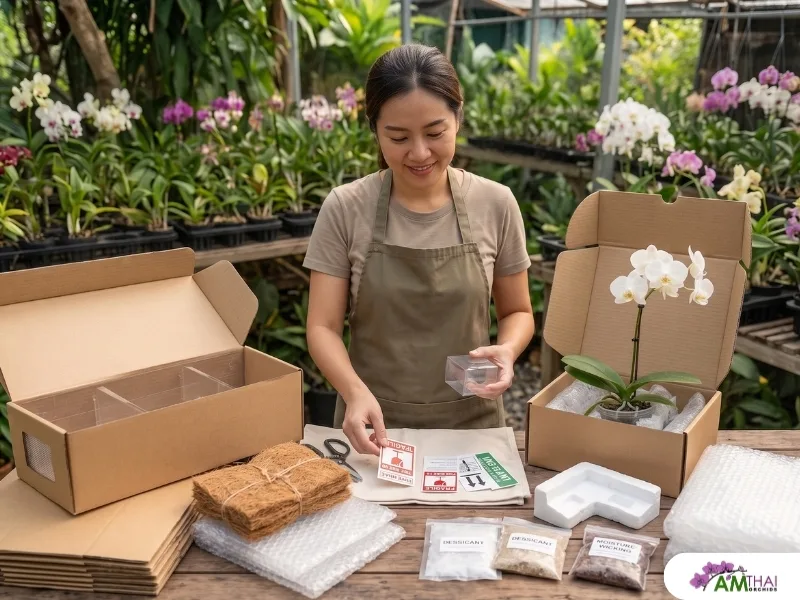
The right packaging depends on the size of the plants, the number of plants in each shipment, and how long they will be in transit. For small to medium-sized plants, strong corrugated cardboard boxes are commonly used because they provide good structural support while remaining relatively lightweight.
For shipments that may be stacked or handled several times, multi-layer corrugated boxes can provide additional protection against compression. Inside the box, cushioning materials such as paper, foam, or other suitable protective materials can be used to fill empty spaces and prevent plants from rubbing against one another.
For long-distance shipments, additional strapping such as composite straps may also be used to reinforce the cartons and keep them securely closed. The goal is simple: the box should be strong enough to protect the plants while keeping them stable throughout the journey.
Packing Techniques to Keep Plants Secure and Fresh
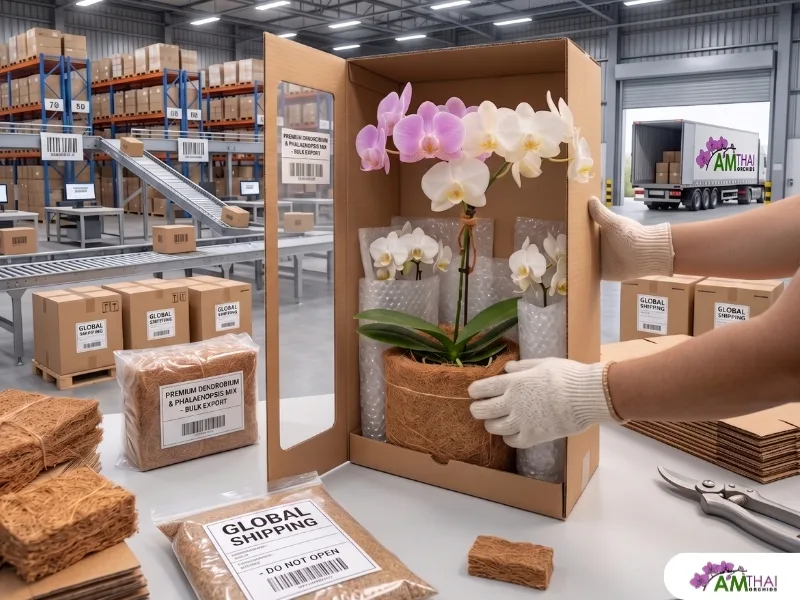
A good plant packing method should keep each plant in place throughout transportation. Movement inside the box is one of the main causes of bruising, broken leaves, damaged roots, and scratched flowers.
Pots, root balls, or the base of the plants should therefore be secured carefully, while cushioning materials can be placed around them to fill empty spaces and prevent shifting. Leaves, branches, and flowers should be arranged gently without excessive pressure or overcrowding.
Packaging materials should also help maintain appropriate moisture levels without trapping too much humidity. Finding the right balance is especially important for long-distance plant shipping, as it helps reduce dehydration while lowering the risk of condensation and rot. When plants are packed securely and given enough space, they have a much better chance of arriving fresh and undamaged.
Temperature Control and Proper Arrangement During Transportation
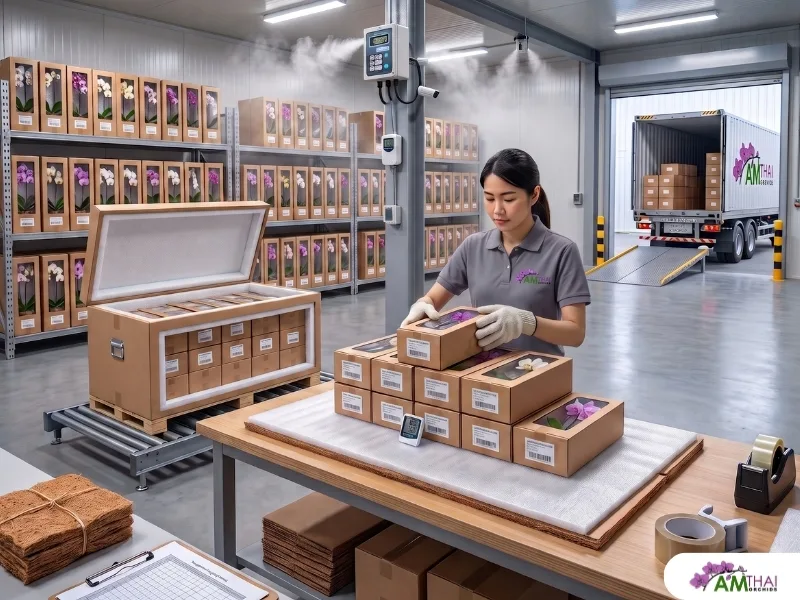
Safe plant transportation also depends on managing temperature, humidity, airflow, and the way cartons are arranged during shipping. Different plant species have different temperature requirements, so there is no single temperature range that works for every shipment.
Many tropical plants are sensitive to chilling and therefore need to be transported within a suitable temperature range for the specific species. Cooler conditions may be appropriate for certain temperate or dormant plants. When temperature-controlled transportation is required, pre-cooling may also be used where appropriate to remove excess field heat and help reduce moisture loss before loading.
During transportation, cartons should be arranged so that they do not block airflow inside refrigerated containers or other temperature-controlled cargo areas. Heavier cartons should generally be placed at the bottom, while pallets, straps, or other securing methods can help prevent the shipment from shifting, tipping, or being crushed.
Careful temperature management and proper cargo arrangement can significantly reduce stress on the plants and help maintain their condition until they reach the destination.
Amthai Orchid: Helping Orchids Arrive Safely and in Excellent Condition
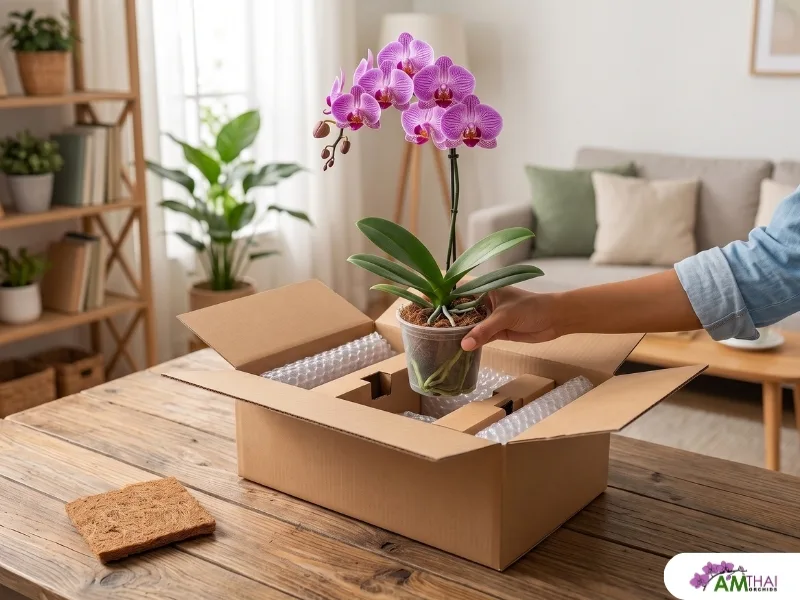
At Amthai Orchid, we pay close attention to every stage of the process, from selecting healthy orchids to preparing, packing, and shipping them to customers overseas. With more than 30 years of experience in orchid export, we understand that successful plant shipping is not only about choosing a strong box. It is also about controlling moisture, reducing impact, protecting delicate plant parts, and keeping every plant securely in place throughout the journey.
Each orchid is packed according to its size, growth stage, and characteristics to help minimize movement and transportation damage. Our goal is to make sure every shipment arrives as healthy, fresh, and well protected as possible, so customers can receive orchids in excellent condition wherever they are in the world.